interstitialRedirectModalTitle

interstitialRedirectModalMessage

Places We Protect

Carl A. Gerstacker Nature Preserve

Michigan

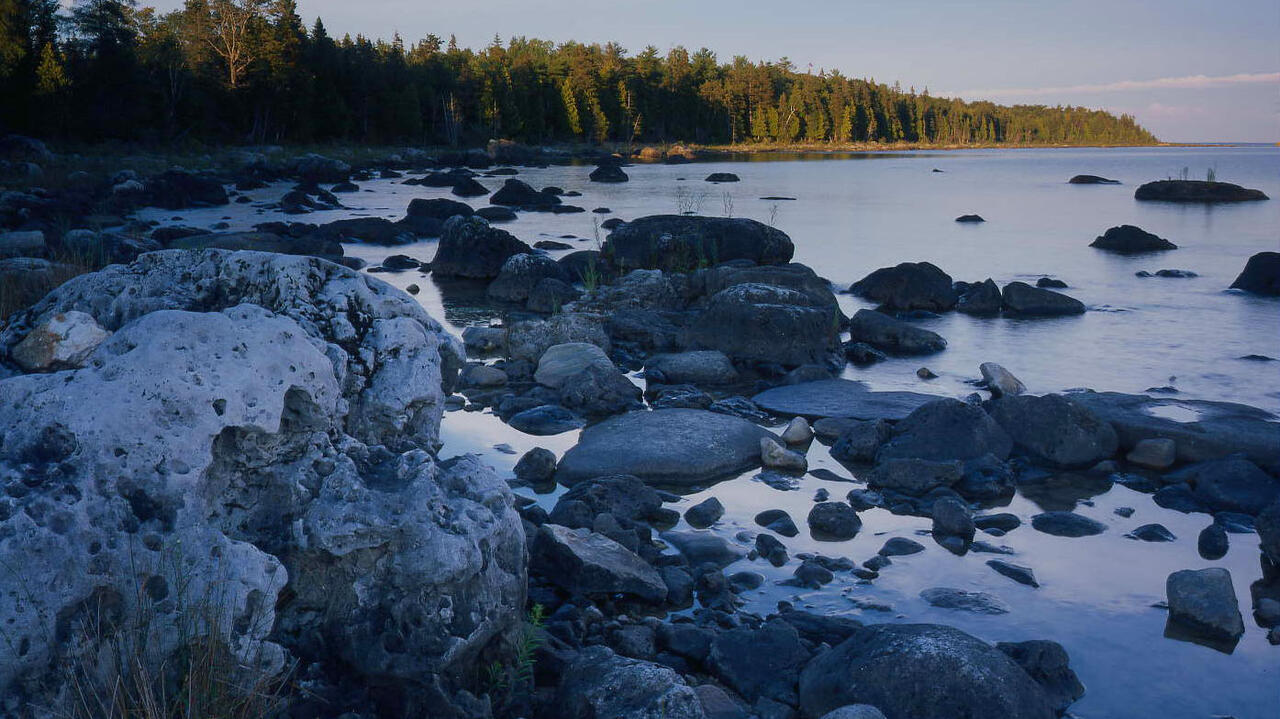
Rocks of various sizes along the shore of a lake. A forest grows on the land surrounding the lake.

Dudley Bay features one of the most spectacular limestone bedrock shorelines in Michigan.

Overview

Description

Carl A. Gerstacker Nature Preserve protects a large expanse of contiguous forest on and near the Lake Huron shoreline to support migratory birds on their journey north and south, as well as safeguard other rare plants and animal species.

Enjoy five miles of beautiful shoreline across four bays on Lake Huron, two small islands, Big and Little Trout Lakes, and parts of two creeks. Visitors might also see a variety of animals including the loon, pileated woodpecker, osprey, wolf, and several species of Neotropical migratory songbirds such as the American redstart and magnolia warbler.

Access

OPEN TO THE PUBLIC

Hours

Sunrise to sunset.

Highlights

Hiking, swimming, bird watching, geocaching, hunting

Size

1615 acres

Explore our work in Michigan

The Nature Conservancy sign on the right. The area is now overcome by plant life.
The Nature Conservancy sign on the right. On the left is shore that is sparse of plant life.
Photos See how the preserve has transformed from 2008 (left) to 2020 (right).

Plan Your Visit

Frequently Asked Questions

  • This preserve is open year round. 

    The month of May is one of the best times of the year to visit this preserve as migratory songbirds are either resting, en route to other destinations, or settling on breeding territories for the summer.

    In mid-September, take a walk down the trail leading to Little Trout Lake and enjoy the spectacular beauty of an autumn day. 

  • The Carl A. Gerstacker Preserve is a wonderful place to hike, snowshoe, cross country ski, watch for birds and other wildlife, take photos and enjoy the sights and sounds of nature. Swimming, [NR1] kayaks and canoes are permitted on Lake Huron. (Vessels must be carried from the parking area.) The preserve also allows geocaching and hunting.

    The Nature Conservancy allows bow hunting for white-tail deer on this preserve to reduce threats too many deer pose to our conservation targets and to ensure that the preserve does not become a “refuge” for deer during the hunting season. In order to be eligible to hunt at this preserve, hunters are required to receive a permit from TNC, follow TNC hunting program rules and comply with all local, state and federal laws and ordinances governing hunting activities, including obtaining all required government licenses or permits. For more information, please visit our Deer Hunting in Michigan page.

    Trails

    ·      Trails are easy to hard with some areas of ups and downs and rocks and roots. Trout Lake and Little Trout Lake trails - Network of trails is 2.7 miles. 0.8 miles to Big Trout Lake; Trail to Little Trout Lake is 0.5 miles[NR2] 

    §  Audio Tour
    Our guided audio tour includes stories, fun facts, historical notes, and natural sounds to help deepen your connection to the Carl A. Gerstacker Nature Preserve. You can access the tour from the comfort of your home or onsite as you hike. Learn More

    §  iNaturalist
    Help our scientists and restoration managers keep track of the species in our nature preserves by using iNaturalist. You can record your observations, help others identify species and view other users' identifications. Learn More
    More Ways to Explore

    We offer a variety of ways to explore including geocaching, webinars, events and volunteer opportunities. You can even request a permit to use TNC lands for scientific research! Learn More
    The excel sheet from conservation said that swimming is allowed at the preserve. I feel like legal should weigh in on that …. We likely need some language about this being at your own risk/there is no lifeguard on duty, etc.


    • Hours: Sunrise to sunset
    • Restrooms: There are no restrooms available.
    • Visitor center: There is no visitor center.
    • Picnic area: There is no designated picnic area.
    • Wildlife viewing areas: While you can view wildlife throughout the trail, there are no designated overlooks, platforms or wildlife viewing areas.
    • EV Charging: EV charging is not currently available.
    • Cell phone and wifi service: Most TNC preserves are located in remote areas, meaning cell phone and wifi service may not always be available.
  • Wear comfortable footwear suitable for natural trails, but please do not wear heavy, cleated boots that can damage them.

    To protect yourself from ticks, poison ivy or poison sumac, wear long pants and tuck them into your socks.

    No matter the season, each person in your party should bring a full water bottle. Dehydration is a serious risk at any time of the year.

    To get the most from your visit, you may want to bring some or all of the following items:

    ·      Snacks

    ·      Camera

    ·      Insect repellent

    ·      Rain gear

    ·      Sunscreen

    ·      Binoculars

    ·      Compass

    ·      Field guides (wildflowers, birds, butterflies & other natural features)

    ·      First aid kit

  • Our vision is of a world where people and nature thrive together. The Nature Conservancy encourages people of all ages, experiences and abilities to visit our preserves and has a zero-tolerance policy for discrimination of any kind.

    Service animals specifically trained to aid a person with a disability are welcome.

    OPDMDs

    ​​OPDMD’s are prohibited anywhere on the Carl A. Gerstacker Preserve, as trails are unsafe for OPDMD’s to drive and contain sensitive natural features. The two-track roads could accommodate OPDMD’s, but The Nature Conservancy is not in a position to determine who may or may not access the private lands needed to reach our preserve, and we are not able to monitor their safe and responsible use.​

    We encourage you to hike open trails and enjoy bird and wildlife watching and other permitted activities. Please do not trespass (or park) on private property adjacent to Conservancy preserves. Property lines are clearly marked with yellow signs featuring the Conservancy’s logo. To protect the plants and wildlife that call the preserve home, TNC prohibits the following:

    ·      Biking and mountain biking

    ·      Camping, campfires and cooking

    ·      Caving

    ·      Fishing (except by permit on designated preserves)

    ·      Horseback riding

    ·      Hang gliding or paragliding

    ·      Ice skating

    ·      Picking flowers, berries, nuts or mushrooms

    ·      Removing any part of the natural landscape (shells, rocks, etc.)

    ·      Rappelling

    ·      Rock climbing

    ·      Snowmobiling

    ·      Swimming

    ·      Firewood collecting

    ·      Littering (please remove all trash)

    ·      Drones – aka Personal aircraft, Unmanned Aircraft Systems (UAS) and Unmanned Aerial Vehicles (UAV) — Self-propelled or other aircraft are prohibited from taking off, landing or being operated on any TNC preserve except for official TNC purposes, approved research, or in an emergency landing situation. We prohibit the private use of drones on our preserves for the following reasons:

    o   Privacy and enjoyment of other preserve visitors – In order to avoid capturing images of people who are not related to TNC, and from whom a necessary photo release has not been obtained.

    o   Wildlife disturbance – To make sure drones will not disturb resident wildlife, especially areas with many birds or ground based nests.

    o   Preserve management – Unauthorized drones operating in areas where active land management is taking place, such as prescribed burning, could lead to potentially dangerous interactions.

    o   Respecting neighboring property – Preserve boundaries are not always apparent from the ground. We wish to be good neighbors and minimize the risk of drones accidentally crossing over from our preserves to non-TNC property


  • Have questions about the preserve? Contact us at miplaces@tnc.org.  If you are experiencing an emergency, please call 911.

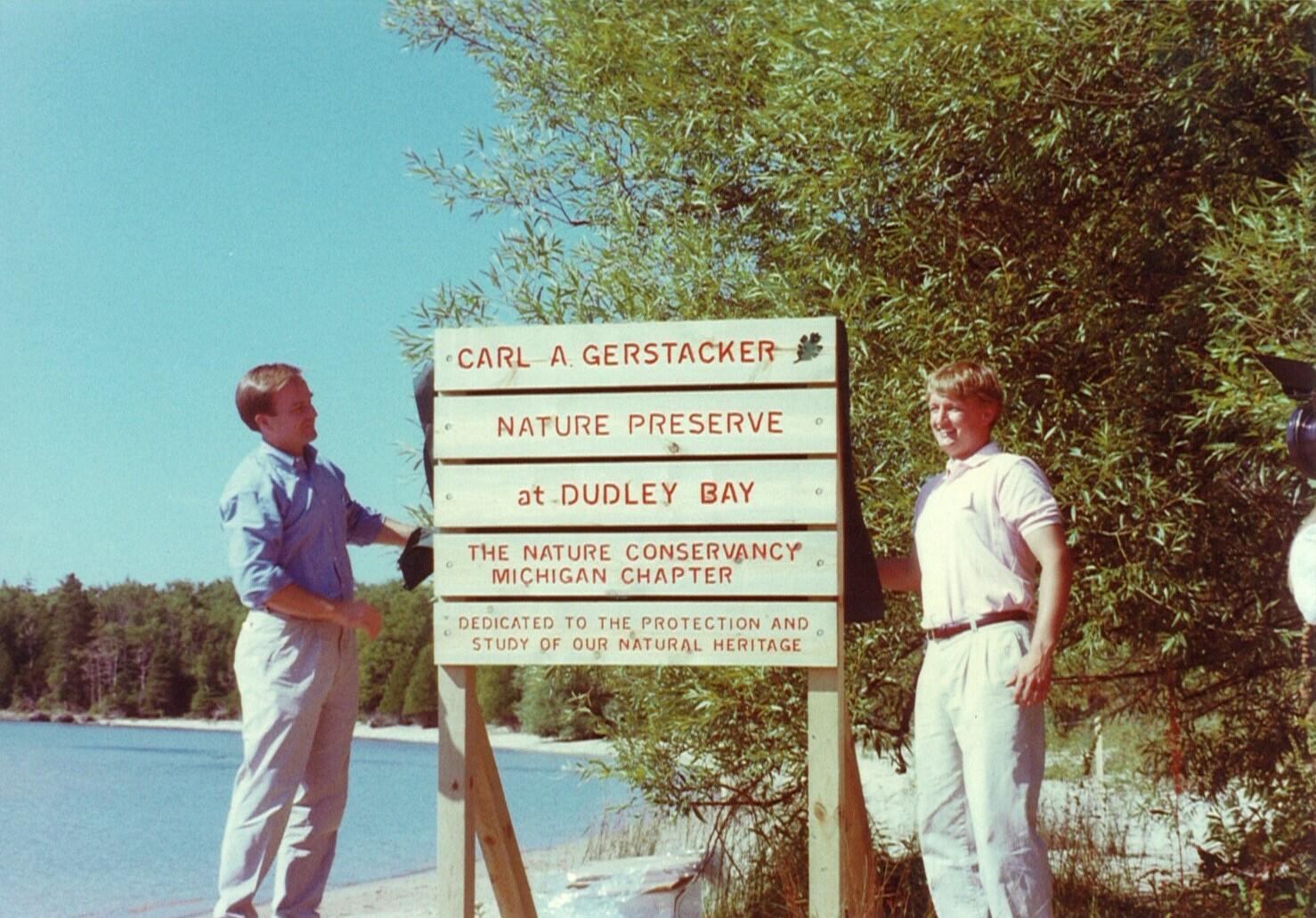
Two people stand next to a wooden preserve sign.
Preserve Dedication The preserve was officially renamed in 1996 after Carl E. Gerstacker, a founding member of the TNC’s Michigan board of trustees.

Our Work

The preserve was created in 1993 through the generosity of Marilyn Twining and her family who, over a period of years, sold the major parcels of land to TNC in order to protect them as the Little Trout Lake Preserve and the Dudley Bay Preserve.

In honor of a combined grant from The Dow Chemical Company Foundation, the Herbert H. & Grace A. Dow Foundation and the Rollin M. Gerstacker Foundation, the preserve was renamed in 1996 after Carl E. Gerstacker. Gerstacker was the former chairman of the board and director of The Dow Chemical Company as well as a founding member of the TNC’s Michigan board of trustees.

Keep Exploring

From shifting sand dunes to granite bald mountains, explore our preserves and reserves spread across the state of Michigan.

Find More Places We Protect

The Nature Conservancy owns nearly 1,500 preserves covering more than 2.5 million acres across all 50 states. These lands protect wildlife and natural systems, serve as living laboratories for innovative science and connect people to the natural world.

See the Complete Map

Make a Lasting Impact

You have the power to make a difference for the Great Lakes State and for our planet. Your support will help fund groundbreaking science and conservation activities that protect the lands and waters you love.